Ready to get help? Contact one of our Treatment Consultants.


Serving patients across Delaware
Accessible opioid addiction treatment and recovery support at multiple convenient locations throughout Delaware.
Evidence-based MAT treatment
Personalized medication-assisted opioid addiction treatment using proven therapies like methadone and buprenorphine to support long-term recovery.
Same-day intake available
Fast access to care with same-day appointments designed to help patients begin opioid addiction treatment without delay.
When I started practicing addiction medicine after my residency in 2009, the landscape of opioid use disorder looked different from what I see today. The patients were different. The drugs were different. The risks were different.
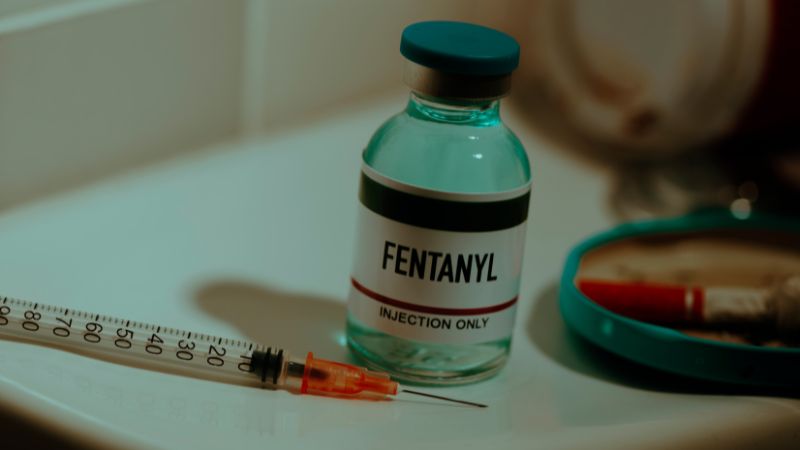
Fentanyl changed all of that in modern opioid addiction treatment.
I am Dr. Okechukwu Obua, Chief Medical Officer at CORAS Wellness. Over 17 years in addiction medicine, I have watched fentanyl reshape everything in opioid addiction treatment: who comes into treatment, what we find in the drug supply, how we diagnose withdrawal, and what dangers we have to warn patients and families about. Here is what that shift looks like from the clinical side.
The Drug Supply Is No Longer What It Was
Prescription opioids and heroin-driven addiction patterns
For years, the opioid crisis was driven by prescription medications and then heroin. Clinicians understood the timeline of withdrawal, the expected symptoms, and the dose ranges used in traditional opioid addiction treatment.
Fentanyl replacing heroin in illicit markets
Fentanyl is a synthetic opioid far more potent than heroin. Its introduction into the illicit drug supply did not happen gradually. It replaced heroin in many markets almost entirely, accelerating the need for fentanyl addiction treatment protocols faster than clinical systems could adapt.
Why today’s drug supply is unpredictable
What patients are buying on the street today is not what it was 10 years ago. It is not even reliably what it was last month. Every batch is different. This unpredictability has made fentanyl withdrawal treatment significantly more complex.
We Could Not Even Test for It at First
Early urine drug screen limitations
When fentanyl first began appearing at scale, standard urine drug screens did not include it. Clinics lacked proper tools for accurate fentanyl opioid addiction treatment diagnosis.
Hidden fentanyl exposure in early clinical practice
So for a period of time, we did not know what our patients were on. Patients presented in full opioid withdrawal, yet testing was negative. This gap in detection delayed proper opioid addiction treatment planning and clinical response.
We now test specifically for fentanyl, improving accuracy in opioid use disorder treatment, but it took years for systems to catch up.
Withdrawal Timing Is Unpredictable
How fentanyl changes withdrawal timing
One of the core principles in fentanyl addiction treatment is understanding withdrawal timing.
With heroin, the window was fairly consistent. Most of my patients told me they started feeling sick within two to three hours of their last use.
Why batches and contamination matter
Fentanyl does not follow a predictable pattern. This makes fentanyl withdrawal treatment more difficult because onset varies based on potency, batch composition, and contaminants.
I see patients who used the night before and are already in severe withdrawal, while others appear stable longer. This unpredictability is a defining challenge in modern fentanyl opioid addiction treatment.
The Salad of Drugs in the Current Supply
Fentanyl was disruptive enough on its own. What has happened since is more complicated.
What xylazine is and why it appears in drug supply
The current street supply is not just fentanyl. It is a mixture. Xylazine, known as tranq, has been found in drug supplies across Delaware and the surrounding region. Mitomidate has been identified in some supplies. There are other adulterants we do not even have reliable tests for.
Xylazine is not an opioid. It is a veterinary sedative more closely related to clonidine, which is a blood pressure medication we have actually used to help reduce withdrawal symptoms. Nobody seeking an opioid high is specifically seeking xylazine. But it is in the supply, and patients are exposed to it without knowing it.
Why users do not know what they are taking
This means that when a patient comes in for opioid addiction treatment, we often cannot fully account for everything in their system. The testing is incomplete because the tests do not exist for all of it.
What Xylazine Does to the Body
Why naloxone does not reverse xylazine
Because xylazine is not an opioid, standard medications used in opioid use disorder treatment such as methadone or buprenorphine do not reverse its effects.
Skin wounds and necrotic ulcers
The most visible sign of xylazine exposure is the skin. Patients who inject drugs that contain xylazine develop necrotic wounds. Deep, slow-healing ulcers that do not respond the way a typical injection site infection would. In some cases, these wounds are severe enough to require hospitalization.
For patients who are using by other methods, there may be no outward sign. We have no routine blood or urine test that flags xylazine at most treatment facilities. The cost and availability of specialized testing makes it impractical in everyday clinical settings.
When I talk to patients about xylazine, I tell them: you do not even know if there is rat poison in what you are using. That is not an exaggeration for effect. It is just true. The supply is uncontrolled, and you are not getting what you think you are getting.
How This Changes the Conversation About Treatment
Fentanyl potency and overdose unpredictability
The contaminated drug supply is one of the strongest arguments for entering structured opioid addiction treatment and MAT treatment (medication-assisted treatment) programs.
Rise of medication-assisted treatment (MAT)
In a program like ours, the medications are FDA approved. They are lab sourced. We know exactly what is in them. The dose is verified. There is no fentanyl in the methadone. There is no xylazine in the buprenorphine. You know what you are getting. Structured opioid addiction treatment programs provide patients with safer, medically supervised recovery support.
For patients who are still using street drugs, every use is a gamble on an unknown product. The risk of overdose is real not just because of the opioid itself but because of everything else that may be in the batch.
Mixed-drug overdoses and emergency response challenges
Naloxone, the overdose reversal medication, works on opioid receptors. It can reverse a fentanyl overdose. It cannot reverse xylazine sedation, because xylazine does not work on opioid receptors. This means an overdose involving both fentanyl and xylazine may not respond to naloxone the way a simple opioid overdose would. Bystanders and emergency responders need to know this.
Why structured treatment is safer than street use
For patients who need more than outpatient care, learn what happens during residential opioid rehab treatment at CORAS Wellness and Behavioral Health.
Frequently Asked Questions
How is fentanyl different from heroin?
Fentanyl is a synthetic opioid that is significantly more potent than heroin. It is faster acting and clears the body more quickly, which means withdrawal can begin sooner and more intensely. Its potency also means there is less margin for error in dosing, which is part of why it has driven overdose rates higher.
What is xylazine, and why is it in the drug supply?
Xylazine, sometimes called tranq, is a veterinary sedative that has been found mixed into fentanyl and heroin supplies. It is not an opioid. We do not know precisely why it is being added, though it may be used to extend or alter the effect of fentanyl. It is not something people seek out deliberately.
Can naloxone reverse a xylazine overdose?
Naloxone reverses opioid overdoses by blocking opioid receptors. Because xylazine does not work on opioid receptors, naloxone cannot reverse xylazine sedation. In a mixed overdose involving both fentanyl and xylazine, naloxone should still be administered for the opioid component, but the person may remain sedated even after the opioid is reversed. Emergency services should be called immediately.
How do I know if someone has been exposed to xylazine?
The most visible sign is skin wounds. Patients who inject drugs containing xylazine develop necrotic ulcers that are slow to heal and often appear at injection sites or other areas of the body. If someone you know is developing unexplained skin wounds alongside drug use, xylazine exposure is a possibility.
Does methadone treatment help with xylazine exposure?
Methadone and buprenorphine treat opioid dependence. They do not address xylazine, which is not an opioid. However, getting into a structured MAT program removes a patient from the contaminated street supply entirely. That is the most effective protection.
Is the drug supply in Delaware affected by fentanyl and xylazine?
Yes. Fentanyl is now the dominant opioid in the illicit supply in Delaware and across the surrounding region. Xylazine has been identified in drug supplies throughout the Mid-Atlantic states. Patients and families should assume that any illicit opioid may contain fentanyl, and that xylazine or other adulterants may also be present.
How long does opioid addiction treatment typically last once someone enters a MAT program?
There is no set timeline. Treatment continues as long as a patient is making progress. Learn how long MAT treatment for opioid addiction usually lasts, goes into detail on what progress looks like and how tapering works.
Ready to Start Treatment?
If you or someone you love is struggling with opioid use disorder, CORAS Wellness is here to help. Our MAT program is available at four locations across Delaware, with early morning hours designed to fit around your life.
Call us at 833-886-2277 or visit coraswellness.org/contact to speak with a treatment consultant. Same-day intake appointments are available.
About the Author
Dr. Okechukwu Ernest Obua serves as Chief Medical Officer at CORAS Wellness & Behavioral Health, where he oversees medical care for all patients across the organization’s methadone, detox, and rehabilitation programs. Dr. Obua trained in family medicine at Henry Ford Hospital in Detroit, where he developed a deep interest in addiction medicine after witnessing the confusion and inconsistency in how opioid prescriptions were handled. Since completing his residency in 2009, Dr. Obua has practiced addiction medicine exclusively, specializing in running methadone clinics as a medical director.
Dr. Obua holds the following board certifications and credentials:
- Diplomate, American Board of Family Medicine
- Diplomate, American Board of Addiction Medicine
- Diplomate, American Board of Preventive Medicine (Addiction)
- Fellow, American Society of Addiction Medicine
He attends the annual ASAM conference to stay current on new developments in substance use disorder treatment and evidence-based practices.
