

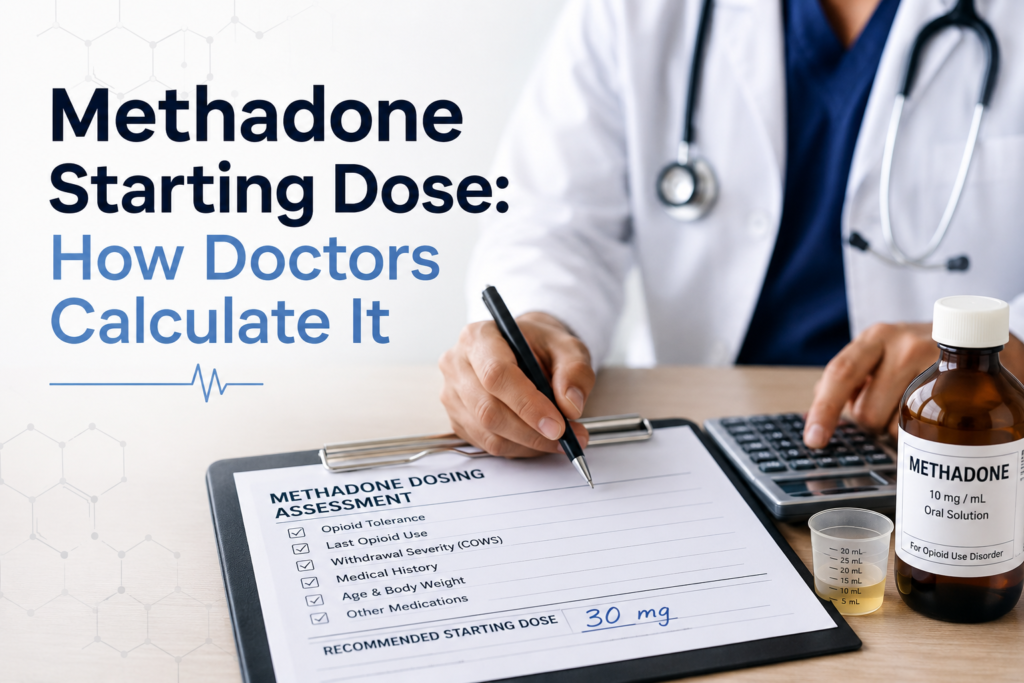
Methadone starting dose decisions are based on clinical judgment, withdrawal symptoms, and individual patient factors. The first dose of methadone you receive in treatment is not a standard amount. It is a clinical judgment call, and how we make that call matters more than most patients realize.
Too low, and you spend your first day in treatment still sick. Too high, and there is a real risk of overdose, especially with the opioids circulating in the street supply today.
I am Dr. Okechukwu Obua, Chief Medical Officer at CORAS Wellness. I have been making this judgment every day for over 17 years. Here is how the process actually works.
Why There Is No Standard Starting Dose
The range we work within at induction for a methadone starting dose is 10 to 60 milligrams. That is a wide range, and it exists for good reason.
Every patient is different. The type of opioid they were using, how long they were using it, when they last used, how much they typically used, and what their body has built up a tolerance to, all of these factors affect the right methadone starting dose.
And here is the honest clinical reality: patients do not always tell us the full truth.
Somebody might have used their last two bundles of heroin in a parking lot on the way to the clinic, and then tell me they used last night or that they only used one bag. If I take that at face value and give them 20 milligrams, they could overdose. So over time, you learn to read the clinical signs when determining a methadone starting dose..
The Two Physical Signs I Look at First
Pupil Size
Opioids cause the pupils to constrict. When a patient is high or has opioids still active in their system, their pupils will be tight, sometimes pinpoint small.
If a patient tells me they are very uncomfortable but their pupils are constricted, I have a reason to be cautious when deciding the methadone starting dose. The story and the physical exam do not match. That patient probably has more in their system than they are telling me, and I would start at a lower dose.
On the other hand, if someone comes in and their pupils are dilated almost to the rim of the iris, that tells me the opioids have worn off. The body is responding as it should during withdrawal. I can feel more confident selecting a higher methadone starting dose.
Pulse Rate
Opioid withdrawal activates the body’s stress response. One of the physical signs is an elevated heart rate. When a patient is genuinely in withdrawal, I expect the pulse to be above 80.
If someone says they are in severe withdrawal but their pulse is 60 and their pupils are tight, those vital signs do not support the story. I factor that into the methadone starting dose decision.

What the Patient Tells Me
Most of the symptoms of opioid withdrawal are subjective. The patient tells me about abdominal cramps, muscle aches, anxiety, nausea. There is no lab test that measures how uncomfortable they feel.
So dosing – especially the methadone starting dose – is a collaboration. I am looking at what I can measure objectively and balancing that with what the patient is telling me. Experience teaches you how to weigh those two things against each other.
The Induction Range and How We Escalate
We can start anywhere from 10 milligrams up to 60 milligrams on day one, depending on what I see. After that initial dose, we escalate the dose as quickly as we reasonably can to get the patient comfortable.
The goal during induction is to get you to a stable therapeutic dose, which for most of my patients lands between 60 and 120 milligrams. Some patients do very well at 20 milligrams. Others need 200 milligrams and are still struggling. Everyone is genuinely different.
After the induction period, if a patient is still feeling uncomfortable after two weeks, we continue to increase the dose gradually. We do not escalate aggressively at that stage. We go up slowly and give the body time to adjust.
How Fentanyl Complicates the Picture
Fentanyl changed the calculus of induction in ways that were not anticipated when current dosing protocols were developed.
I have patients who come in showing every sign of severe withdrawal: body aches, sweating, elevated pulse, dilated pupils. We do a urine screen and it comes back negative. If I had not learned to test specifically for fentanyl, I would not understand what I was seeing.
Standard urine drug panels did not originally include fentanyl. We had to add a separate assay for it. So for a period, we genuinely did not know what some of our patients were on.
Fentanyl is short-acting and clears the urine quickly. A patient can be in significant withdrawal with a negative standard drug screen. You have to know to look for it.
The dosing approach in the presence of fentanyl use is still symptom-based. We go by what we see in the patient, not just what the urine shows. The physical exam, the vital signs, and the patient’s account together guide the decision.
Why the Methadone Starting Dose Is Not the Final Dose
The induction dose is a starting point, not a destination. Some patients feel significant relief within 30 minutes of their first dose. By the time they have finished meeting with their counselor an hour or two later, they look like a different person.
Others have been using so heavily that the induction dose does not fully cover their withdrawal. They feel some improvement but not complete relief. That is expected. We increase the dose at the next visit and continue adjusting until they are stable.
The process requires patience from the patient and clinical judgment from the physician. Getting it right takes a few days. Getting it wrong can be dangerous. That is why we take it seriously.
If you are weighing methadone against other medications, our article on methadone vs. Suboxone explains how we approach that decision with each patient.
Frequently Asked Questions
Will I get enough medication on my first visit to feel normal?
Many patients feel meaningful relief within 30 to 60 minutes of their first dose. Whether the induction dose fully covers your withdrawal depends on your history and how much you were using. If you are still uncomfortable, we adjust the dose at your next visit.
Why do doctors start at a low dose rather than giving me what I need right away?
Starting too high is more dangerous than starting too low. Until we understand your individual tolerance and what is actually in your system, a conservative start protects you. We escalate quickly from there.
What if I do not tell my doctor exactly how much I was using?
Experienced physicians read the physical signs regardless of what you say. Pupil size and pulse rate do not lie. Being honest with your doctor helps them get your dose right faster and reduces your risk of discomfort or overdose.
How long does it take to get to a stable dose?
Most patients reach a stable, comfortable dose within a few weeks of starting treatment. Some get there faster, some take longer. The process depends on your individual tolerance and how you respond to the medication.
Does fentanyl use change how the doctor doses me?
Fentanyl use affects how quickly withdrawal symptoms appear and how they show up in a urine screen. Your physician will look at your physical symptoms, not just the test results, to determine the right starting dose. A standard drug screen can come back negative even when a patient is in full withdrawal from fentanyl.
What is the highest dose someone can be on?
There is no hard ceiling. Most patients stabilize between 60 and 120 milligrams, but some patients need more to remain comfortable. Dose is always set based on individual need.
Ready to Start Treatment?
If you or someone you love is struggling with opioid use disorder, CORAS Wellness is here to help. Our MAT program is available at five locations across Delaware, with early morning hours designed to fit around your life.
Call us at 833-886-2277 or visit coraswellness.org/contact to speak with a treatment consultant. Same-day intake appointments are available.
About the Author
Dr. Okechukwu Ernest Obua serves as Chief Medical Officer at CORAS Wellness & Behavioral Health, where he oversees medical care for all patients across the organization’s methadone, detox, and rehabilitation programs. Dr. Obua trained in family medicine at Henry Ford Hospital in Detroit, where he developed a deep interest in addiction medicine after witnessing the confusion and inconsistency in how opioid prescriptions were handled. Since completing his residency in 2009, Dr. Obua has practiced addiction medicine exclusively, specializing in running methadone clinics as a medical director.
Dr. Obua holds the following board certifications and credentials:
- Diplomate, American Board of Family Medicine
- Diplomate, American Board of Addiction Medicine
- Diplomate, American Board of Preventive Medicine (Addiction)
- Fellow, American Society of Addiction Medicine
He attends the annual ASAM conference to stay current on new developments in substance use disorder treatment and evidence-based practices.
