Ready to get help? Contact one of our Treatment Consultants.


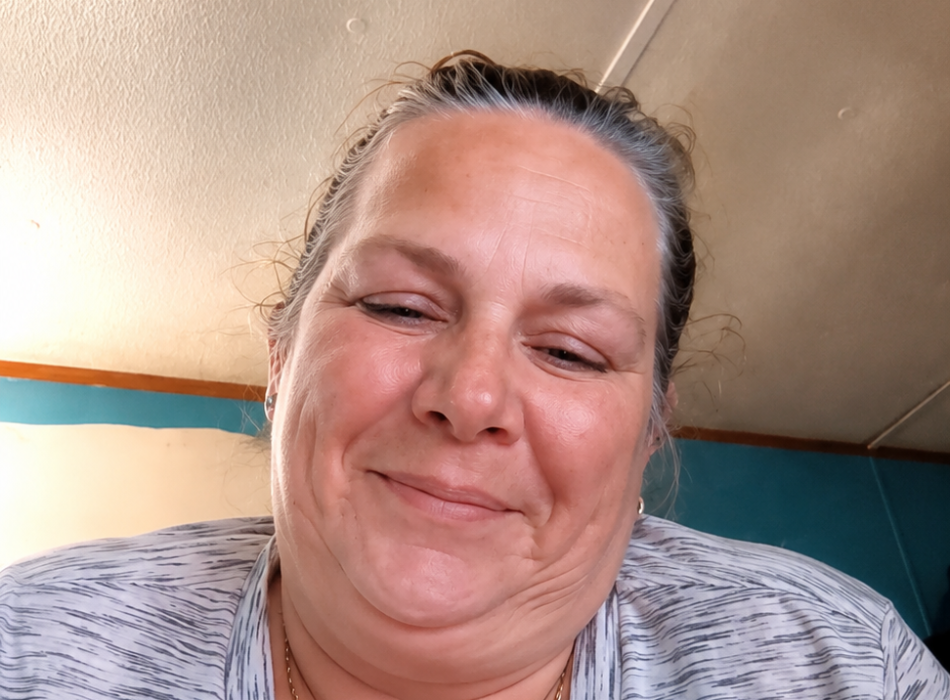
Brooke has been doing home healthcare for about ten years. She has clients who depend on her every day, people who are bed-bound and cannot care for themselves without her. She gets up before dawn. She shows up.
She is also in a medication-assisted treatment program at CORAS Wellness and Behavioral Health, and she has earned her take-home doses.
For Brooke, those two facts are not in conflict. They are the same story.
Growing Up and Getting Here
Brooke grew up in Maryland. When her parents moved to Delaware in 1999, she stayed behind with a friend’s family so she would not have to change schools late in high school. That arrangement ended when her friend’s father found a note in her pocket where she and a friend had discussed skipping class. They never actually skipped, but the father sent her to Delaware with her mother anyway.
She started over in a new state, not by choice. She did not go to college. She had her son at 18 and her daughter at 21. She enrolled in a CNA program and was working toward a healthcare career when a serious car accident put her in Salisbury Hospital for about a month. After discharge, she could not get the program funded again. Life moved on, and she never went back.
She wants to go back now.
How Substance Use Started: A Real Account of How It Happens
Brooke began using pills in her early to mid-20s, somewhere around 24 or 25. It started with her brother, someone she trusted, in a setting that felt safe. Once was enough to open the door.
“It started off with just trying it with my brother one time,” she said. “And then it just kind of went from there.”
At first the pills were occasional. Then she noticed what they did for her at home. When she was high, she was numb, and nothing her stepfather said could upset her or hurt her. So she started using before she went home for the night. “It was like a light bulb went off in my head,” she said. “A lot of people don’t realize why they use or what they’re covering up.”
It moved from occasional to daily without a clear line she could point to. When she told herself she was done and stopped, she thought she had the flu. Chills, sweating, diarrhea, vomiting. She had watched her brothers go through withdrawal and told her mother they were faking it. She believed that.
“When it happened to me, I honestly didn’t believe in that. And then my brother gave me half a pill and in 15 minutes I felt great. And I was like, that sucks really bad.”
That was the moment she understood what addiction actually is. It took a long time after that, she says, to stop thinking of it as a choice rather than a disease. Her father was an alcoholic. The narrative she had grown up with was that these things were weakness or excuse. She carried that belief even about herself.
“I struggled with that for a long time. It was an excuse to me, even for myself.”

Opioid Use Disorder and the Limits of Early Treatment
Pills became harder to get as pain management regulations tightened across the country. Brooke, like many people with opioid use disorder during that period, transitioned to heroin. She made her first real attempt at treatment through a program in Georgetown that used Suboxone.
The problem was scheduling. The program required her to come in for dosing on a rigid schedule that did not bend for her job. She was told, in effect, to choose.
“How the hell do you expect me to be functional if I got to pick between dosing or my job? I shouldn’t have to pick.”
She chose her job. Without treatment, the addiction returned. Then her father died. She used again.
Eventually she found her way into what was then called Connections, now CORAS. She worked for Connections for two years, in their housing department, doing peer support and case management.
Xylazine Changed Everything
Brooke found that the drug supply had changed.
Xylazine, a veterinary sedative sometimes called “tranq,” has been increasingly found in the illicit opioid supply across the United States. The substance is not an opioid, which means it does not respond to naloxone, and it dramatically prolongs and intensifies withdrawal.
Brooke had heard about it being a problem in Philadelphia. She did not think it had reached Delaware.
“I thought that stuff was like up in Philly. I thought it was just like an up-in-the-city thing. I didn’t think it was down here. Once I realized it was in what I was getting…”
She lost her car in an accident. Without transportation, she could not work and could not access the drug. Withdrawal set in hard. After about 13 hours the first night, she made a decision.
“We’re going to the clinic in the morning. I am not going to be sick.”
She found a way there before it opened.
Even after she started methadone, she felt sick for days. The methadone addressed the opioid component, but xylazine had to work its way out of her body on its own timeline. Standard opioid treatment has no direct mechanism against it. She sat through intake feeling terrible and confused about why the medication was not helping faster.
“It was crazy. I don’t want to go through that again. That was horrible.”
What CORAS Does Differently
Her first morning at CORAS, intake took about three hours.
Her current treatment through CORAS’s MAT outpatient program consists of methadone, regular check-ins with her counselor Chelsea, and clean urine submissions. No mandatory group sessions. No three-days-a-week group therapy schedule that would force her to leave a bed-bound client mid-shift.
“I can’t just leave my bed-bound client because they want me to do a group. That made it very hard, especially with what I do.”
She has already earned take-home doses. She now goes once a month on Fridays. She and her husband arrive by 5:30 AM so it does not affect their workday. Fridays are busy at the clinic even that early, but it fits.
She has heard nothing about mandatory groups and has not been asked to attend any. She is clear that for someone still teetering, additional structure might be exactly what they need. For her, the current level of support is the right match.
“I’m fine where I’m at.”
Methadone: What Brooke Thought It Would Be vs. What It Is
Brooke was afraid of methadone before she started.
She had seen people visibly sedated after dosing and wanted no part of that. She was trying to get sober, not trade one impairment for another.
“I felt like if I got on methadone I would just be chasing another high.”
Her actual experience has been different. She does feel some fatigue, especially earlier in the day if she is not active. Since she returned to working, she barely notices it. She is functional. She is present. For anyone curious about what the process involves, CORAS has published a detailed explanation of what to expect at a methadone clinic and how take-home bottles work.
Her Counselor, Chelsea
Brooke talks about Chelsea often. Chelsea is her counselor at CORAS, and by every measure she describes, the relationship is working.
When Brooke needed a clearance letter for her job, Chelsea handled it. The employer’s physician had flagged her methadone treatment and required documentation before allowing her to continue in her patient-care role. Chelsea coordinated with the clinic doctor, the letter was written, and Brooke kept her job.
“They’ve made it so it doesn’t affect my job. That’s the biggest thing.”
Research consistently shows that counseling is a key factor in successful addiction treatment outcomes. For Brooke, Chelsea is not a bureaucratic requirement. She is someone Brooke talks to when she happens to be there, beyond the scheduled sessions, because it helps.
The role of counseling in opioid use disorder treatment is well-documented. In Brooke’s case, that relationship is personal.
Where Brooke Is Headed
Brooke has been doing home healthcare for a decade. Her company hires CNAs. Her kids are grown now. The obstacles that kept her from finishing that certification years ago are gone.
“I want to continue to grow in the healthcare field.” She is thinking about her CNA first. Then, maybe, LPN or RN.
She is careful not to get too far ahead of herself. The philosophy she lives by is uncomplicated: one day at a time. Not because it sounds right, but because the alternative, projecting years into the future, overwhelms her.
“I don’t want to be going backwards in three years.”
What Brooke Wants You to Know
She does not frame her advice carefully. She says it the way she lived it.
“The first step to acknowledging you have a problem is acknowledging you have a problem. If it looks like a duck and it quacks like a duck, it’s probably a duck.”
She knows that the thought of getting help feels scarier than it turns out to be. She was there. And she knows that the scariest leap she ever took toward recovery was nothing compared to some of the other chances she took when she was using.
“Take the leap. We’ve taken worse leaps. We took the leap to try the craziest stuff out there. Take the leap and get off of it. It couldn’t be harder than doing the scariest thing you’ve ever done.”
Change is not comfortable. She says that plainly. If it were comfortable, it would not be change. But it does not get better on its own.
“It’s only gonna get worse if you don’t. You have to be uncomfortable.”
Ready to Take the First Step?
If Brooke’s story sounds familiar, CORAS Wellness and Behavioral Health is ready to help. CORAS offers medication-assisted treatment, counseling, and outpatient programs designed to work around your life, including your job.
Call us at 833-886-2277 or visit coraswellness.org to learn more. CORAS serves patients at locations in Millsboro, Dover, Harrington, Newark, and Wilmington.
Frequently Asked Questions
Can I go to a methadone clinic while working full time?
Yes. CORAS structures its MAT program to accommodate working patients. Brooke arrives at 5:30 AM on her dosing days. Once patients earn take-home privileges, clinic visits become less frequent. Many patients, like Brooke, now go just once a month.
What is xylazine and why does it make withdrawal worse?
Xylazine is a veterinary sedative increasingly found as an adulterant in the illicit opioid supply. It is not an opioid, so medications like methadone and buprenorphine do not act on the xylazine component during withdrawal. People may experience prolonged or more severe symptoms as a result. Brooke felt sick for several days after starting methadone because of xylazine in her system.
What does the CORAS MAT program involve?
CORAS offers medication-assisted treatment using methadone. Patients meet regularly with a counselor, submit urine samples, and work toward take-home doses as they demonstrate stability. Individual needs vary. You can learn more about how long opioid use disorder treatment takes and explore whether methadone or Suboxone is right for your situation.
Does my employer have to know I am in a treatment program?
You are not required to tell your employer you are in treatment. Federal law, including the Americans with Disabilities Act and HIPAA, provides protections for people in recovery. If your job requires a medical clearance related to your treatment, CORAS can provide the necessary documentation, as they did for Brooke.
What if I am scared to start?
Brooke was scared too. She describes the fear of starting as bigger than the experience of actually doing it. Her advice: acknowledge the problem, then make the call. It does not get better on its own.
The Road to Recovery is an ongoing series. Each story is shared with the participant’s consent.
