

If you or someone you love is struggling with opioid or alcohol use disorder, one of the first questions that comes up is: do I need to go to detox first, or can I go straight to a residential treatment program? It seems like it should be a simple question. It is not, and getting it wrong can make the difference between a treatment experience that sticks and one that falls apart before it even begins.
I’m Shelby Stevens, Director of Residential Services at CORAS Wellness & Behavioral Health in Harrington, Delaware. I have spent over a decade working in addiction treatment, and before that I walked through these doors as someone in crisis myself. I have seen what happens when people try to skip steps, and I have seen what happens when someone gets the right level of care at the right time. Here is what you need to know.
What Is Medical Detox, and What Does It Actually Do?
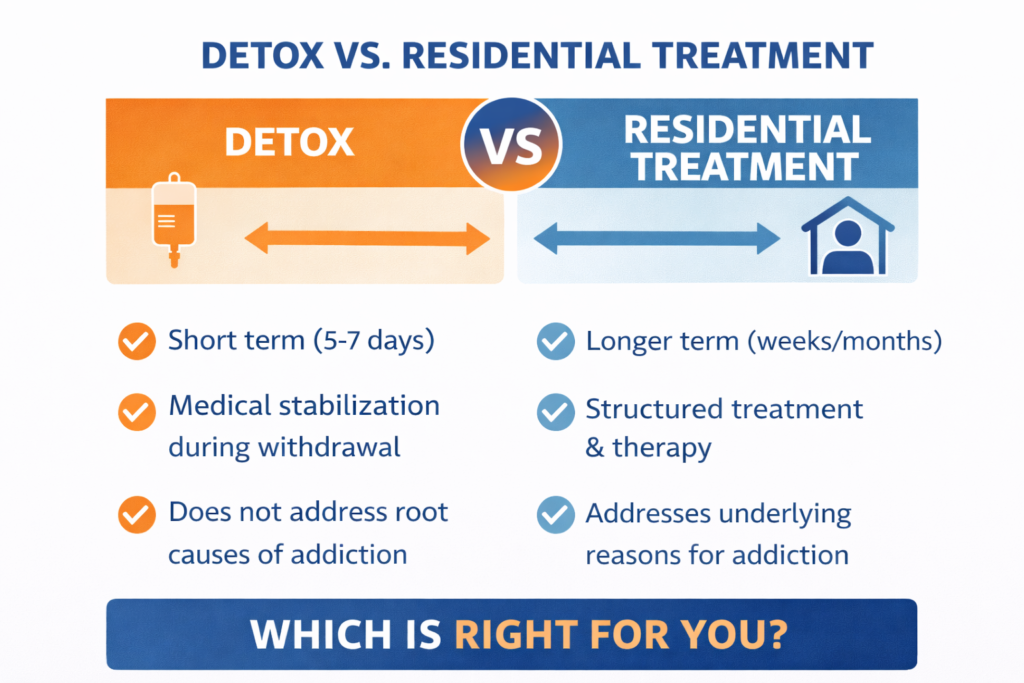
Detox is a short-term, medically supervised process. At most facilities it lasts around five days. Its sole purpose is to stabilize you physically through the acute phase of withdrawal. That is it. Detox is not treatment. It is not therapy. It is not recovery.
When you are actively withdrawing from opioids or alcohol, your body is in a state of crisis. The physical symptoms can be severe and, in the case of alcohol withdrawal, potentially life-threatening. Detox facilities exist to manage those symptoms medically and keep you safe during that window.
What detox cannot do is address the reasons you became dependent in the first place. It cannot give you the tools to stay sober. It cannot build the community around you that recovery requires. As I tell people directly: if you go to detox and that is all you do, the success rate is probably less than one percent. You feel like death the whole time you are there. Even if they run groups, you are not going to go. You are going to be in bed, miserable, and the moment the physical symptoms ease up, you are at serious risk of walking out and using again.
Detox without a follow-up plan is not a treatment strategy. The plan should always be to go from detox directly into a residential treatment program where the real work can begin.
What Is Residential Treatment for Addiction, and How Is It Different?
Residential treatment for addiction, sometimes called inpatient rehab, is where actual recovery happens. At our CORAS residential program, you live at the facility while you go through a structured, seven-day-a-week treatment program. You are surrounded by clinical staff, peers in recovery, and a full schedule of groups, individual therapy, life skills work, and recovery planning, all built around your specific needs.
The goal is not just to get you physically stable. The goal is to help you understand why you became dependent, identify the barriers and behaviors that put you at risk for relapse, build the coping skills and community you need to stay sober, and develop a real plan for what your life looks like after treatment. That includes connecting you with the right level of ongoing care, whether that is sober living, our Intensive Outpatient Program, or continued medication management.
That is a very different thing from five days in a detox bed. If you want a fuller picture of what daily life in our residential program looks like, our article on what happens in residential treatment walks through the entire day from morning motivation to evening reflection.
Why Do Most People Need to Go to Detox Before Residential Treatment?
The honest reason is safety, and it comes down to one key difference between detox facilities and residential programs: we do not have 24-hour medical care on-site.
Detox facilities are medically staffed around the clock specifically to manage acute withdrawal. Our residential program is a therapeutic and clinical environment. If someone arrives here in active, severe withdrawal, they are not going to be able to participate in groups, engage with their counselor, or benefit from any of the treatment we offer. They are going to be physically miserable, and if their withdrawal escalates to a dangerous level, we are not equipped to manage that the way a detox facility is.
There is also a practical dimension to this that I am honest about with people. Detox facilities typically have locked doors. Once you make the commitment to go, you cannot just walk out when the discomfort peaks and the urge to use hits hardest. Here at our residential program, the doors are not locked. You are free to leave at any time, though we always encourage you to stay and talk through whatever you are feeling. Going to detox first gives you a protected window to get through the worst of the physical symptoms in an environment designed to hold you through that. Then you come to us ready to actually do the work.
This is especially important for people withdrawing from alcohol. Alcohol withdrawal can be medically dangerous in ways that opioid withdrawal, as terrible as it feels, typically is not. If alcohol is part of the picture, going to detox first is not just recommended, it is essential. SAMHSA guidelines consistently identify alcohol withdrawal as one of the few withdrawal syndromes that can be life-threatening without proper medical supervision.
When Can Someone Come Directly to Residential Treatment Without Detox?
There are situations where someone can come to our residential program without going through detox first, and we always evaluate each person individually. Here is how we think about it.
If You Are Already on Medication-Assisted Treatment
If you are already on a maintenance medication like methadone or Suboxone and you have been using on top of it, you can often come directly to our program. Our on-site provider can evaluate your situation, adjust your dose, and get you to a comfortable level. You may still feel some discomfort while your medication is being optimized, but it is manageable and we have the clinical support to work through it with you. Our MAT program is available right on-site throughout your residential stay.
If you want to understand more about how MAT works and what the medication options are, our guides on methadone treatment, what to expect at a methadone clinic, and methadone vs. Suboxone are a good place to start.
If Your Primary Substance Is a Stimulant
Stimulants like cocaine do not have a formal medical detox protocol the way opioids and alcohol do. Many detox facilities will not accept someone whose primary substance is a stimulant because there is no recognized medical withdrawal syndrome. That does not mean coming off stimulants is easy. The depression and mental exhaustion that follow stimulant use can be significant. When someone comes to us in that situation, our providers see them right away and address those symptoms directly so they can get comfortable and begin treatment.
If You Have a Referral and Are Medically Stable
We do prefer to have a referral for anyone coming into our residential program, whether that comes from a hospital, a detox facility, a bridge clinic, one of our own outpatient locations, or another provider who has laid eyes on you and confirmed you are stable enough for residential care. If you are in a situation where none of those referral pathways are easily available, call us. We will figure out the best path forward together. We are not going to turn someone away who genuinely needs help.
What If I Don’t Qualify for Detox but Still Need Help?
This is more common than people realize. If your primary substance is a stimulant, many detox programs will not accept you. If your withdrawal symptoms are not severe enough to meet the clinical criteria for medically managed detox, you may be turned away even if you feel terrible.
In those cases, we encourage people to at least be seen by a provider at a bridge clinic or crisis center, or by one of our own clinical staff at our outpatient locations, before coming to residential. Getting a provider to assess you and confirm you are safe for residential care protects both you and the integrity of your treatment. It is not about creating barriers. It is about making sure that when you arrive, you can actually benefit from being here.
CORAS Wellness operates outpatient and MAT clinic locations across Delaware, including Harrington, Dover, Newark, and Millsboro. If you are not sure where to start, any of our locations can help point you in the right direction.
Can I Be on Medication-Assisted Treatment During Residential Rehab?
Yes, and this is one of the most important things to understand about our program. Medication-assisted treatment is available on-site throughout your stay in our residential program. You do not have to choose between medication and residential treatment. They work together.
If you arrive on a maintenance medication, we continue it and can adjust your dose as needed. If you are not currently on MAT but our medical providers determine it is appropriate for your situation, we can start it. The goal is always for you to be physically comfortable so that you can be mentally present and genuinely engaged in your recovery work.
For a deeper look at how long the full treatment process typically takes when you factor in both residential care and ongoing outpatient support, our article on how long opioid use disorder treatment takes is worth reading.
What Comes After Detox and Residential Treatment?
Getting through detox and completing residential treatment is a significant accomplishment. But it is not the finish line. The transition out of residential care is one of the most vulnerable moments in recovery, and having a solid aftercare plan is essential.
At CORAS, we start building your aftercare plan from day one of your residential stay. For most residents, the goal is to transition into a sober living environment after leaving our program. Sober living provides the structure and peer support that make early independent recovery sustainable. Many sober living environments also require residents to participate in an Intensive Outpatient Program (IOP), which provides continued clinical support as you return to daily life.
If you are weighing your outpatient options after residential care, our comparison of IOP and PHP in Delaware explains the difference between those two levels of care. We also have information on IOP programs in Delaware and IOP options for people without insurance if cost or coverage is a concern.
An Honest Word About What Makes Treatment Work
I want to say something that does not always make it into clinical literature about detox and residential treatment, because I think it matters.
The sequence matters, but it is not magic. Going through detox and then into residential care gives you the best possible foundation. But what actually determines whether treatment works in the long run is not always the clinical process. It is whether you find something to live for.
I know this from my own recovery. When DFS took my newborn son from my arms, I wanted to get clean. I genuinely did. But wanting to stop and having something strong enough to hold you there are two different things. My son became that thing for me. Getting him back, being present for him, not becoming a story he would have to process later in life. That was what pulled me through the hardest moments.
I have seen the same pattern play out hundreds of times at our program. The residents who sustain recovery long-term are almost always the ones who found something real to come back to. Their children. A parent they do not want to bury them. A version of themselves they have not met yet but can almost picture. Even a job they care about, or a community they want to be part of.
And I have seen the other side too. We have a wall in our facility with obituaries. People who came through our program, who sat in those same chairs and did those same groups, who did not make it back. I have gone to funerals and held their mothers. That is the hardest part of this work. And it is why I take the motivation piece as seriously as any clinical protocol.
I have known people who came through our program multiple times, who knew everything there is to know about recovery, and still relapsed again. When I look closely at those situations, it is almost always the same thing: there is nothing out there pulling them forward. No one depending on them. Nothing they are building toward. The information and the clinical tools are there. The missing piece is a reason.
The clinical steps, the detox, the residential program, the medication, the counseling, they matter enormously. They create the conditions for recovery to happen. But we also spend real time in our program helping each person identify what they are living for. That work is woven into the counseling process from the beginning. Finding that thing, and helping you believe it is still possible to have it, is as much a part of what we do as anything else.
Frequently Asked Questions: Detox vs. Residential Treatment
What is the difference between detox and residential rehab?
Detox is a short-term medical process, typically around five days, that stabilizes you physically through acute withdrawal. Residential rehab is where actual treatment happens: counseling, group therapy, relapse prevention, life skills, and aftercare planning. Detox alone is not sufficient treatment for opioid or alcohol use disorder. It is the first step, and residential care is what comes next.
Do I need to detox before going to residential treatment?
In most cases, yes. If you are experiencing significant active withdrawal, going to detox first is strongly recommended because residential programs are not equipped for 24-hour medical management of acute withdrawal. There are exceptions, particularly if you are already on a maintenance medication or if your primary substance is a stimulant. Every situation is evaluated individually.
How long does detox take before residential treatment?
Medical detox typically lasts around five days. After completing detox and being medically stable, the transition to residential treatment should happen as quickly as possible, ideally directly from the detox facility to the residential program, to minimize the risk of relapse during the gap.
Can I go directly to residential treatment without detox?
Yes, in certain circumstances. If you are already on medication-assisted treatment, if your primary substance is a stimulant, or if you have been assessed by a provider and are medically stable, you may be able to come directly to our residential program. We evaluate each person individually and always try to find a pathway to get you the care you need.
Is medication-assisted treatment available during residential rehab?
Yes. MAT is available on-site throughout your stay in our residential program. You do not need to choose between medication and residential treatment. Our on-site provider manages your medication throughout your stay and adjusts your dose as needed.
What happens after I complete residential treatment?
Most residents transition to a sober living environment and many continue care through our Intensive Outpatient Program (IOP). Aftercare planning begins from your first day in our residential program, so by the time you are ready to leave, you have a real plan in place.
What if detox is not available or I don’t qualify?
If you cannot access detox or do not meet the clinical criteria for it, contact us. We can help connect you with a bridge clinic, crisis center, or one of our own outpatient locations for an assessment before your residential admission. We will not leave you without a path forward.
Does CORAS accept Medicaid for detox or residential treatment?
CORAS Wellness accepts Medicaid and works with a range of insurance plans for our residential program. For questions about detox coverage specifically, the facility you use for detox will have its own admissions process. Contact us and we will help you navigate both steps.
Ready to Take the Next Step?
If you are not sure whether you need detox, residential treatment, or both, call us. Our admissions team at CORAS Wellness will have an honest conversation with you about your situation and help you find the right path. We offer a full continuum of care including our residential program, medication-assisted treatment, and IOP and PHP programs across Delaware.
Call 833-886-2277 for a free, confidential conversation. No judgment, no pressure. Just help.
We serve communities across Delaware from locations in Harrington, Dover, Newark, Millsboro, and Wilmington.
———
About the Author
Shelby Stevens | Director of Residential Services, CORAS Wellness & Behavioral Health
Shelby Stevens has spent over a decade working in addiction treatment at CORAS Wellness, holding nearly every role in the organization before being appointed Director of Residential Services. Shelby’s path into this work began as a client. After becoming homeless following the birth of her son in October 2016 and losing temporary custody, Shelby entered a residential program at what is now the CORAS Harrington facility, where she got clean, regained custody of her son, and built a career from the ground up.
Shelby brings both lived experience and professional leadership to her role. Most of the staff at CORAS Wellness are in recovery themselves, and Shelby has personally hired alumni of the program who have gone on to become peers on the clinical team. Her philosophy is simple: every person who walks through the door deserves to feel safe, cared for, and never ashamed. Recovery is possible. She is proof of it.
CORAS Wellness & Behavioral Health | Residential Program: Harrington, DE | 833-886-2277
