

One of the biggest concerns people have about methadone treatment is the thought of going to a clinic every single day, sometimes for years. If you’re working, raising kids, or just trying to rebuild a normal life, daily clinic visits can feel like a barrier to the stability you’re trying to create.
This article explains how methadone take-home bottles work, how the rules have changed, and what you need to do to qualify for them at Delaware methadone clinics.
Why Daily Clinic Visits Worry People
The traditional image of methadone treatment is people lining up at a clinic every morning, Monday through Saturday, sometimes for years before earning the right to take doses home. For many people, that daily routine creates real challenges:
- You have to wake up early and get to the clinic before work
- You have to stand in line, sometimes with people who are still actively struggling
- Your employer might notice the pattern, or you might struggle to keep a job that requires early shifts or travel
- It can feel defeating to be doing well in recovery but still required to show up every day alongside people who are just starting out
For people who are stable and clean, the daily requirement can start to feel punitive rather than supportive. And for people considering treatment, the thought of that daily commitment can be enough to keep them from walking through the door.
What Methadone Take-Home Bottles Are
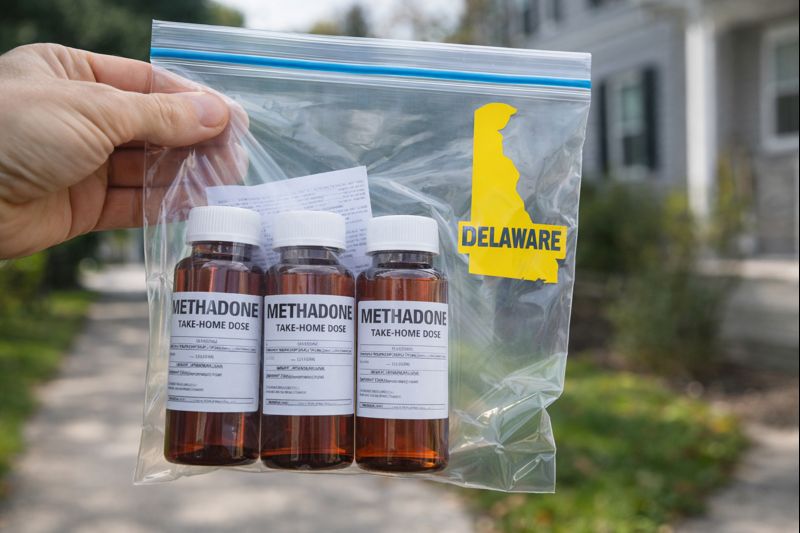
Methadone take-home bottles allow you to pick up multiple days’ worth of doses at once, so you don’t have to come to the clinic every day. Instead of daily dosing, you might come once a week, every two weeks, or even once a month, depending on how long you’ve been stable.
Each bottle contains a single dose. You take them home, store them safely, and take your dose at the same time each day, just as you would at the clinic. The difference is that you’re doing it on your own schedule, in your own home, with your family.
Take-home privileges are earned based on clean drug screens and consistent engagement with the program. They’re not given automatically, and they can be adjusted if someone relapses or stops attending counseling.
How Take-Home Rules Have Changed Over Time
Methadone was introduced in the 1960s, and for decades, the standard approach required people to come to the clinic six or seven days a week, sometimes for a year or more, before earning any take-home privileges.
During COVID, that changed. Clinics needed to reduce foot traffic to prevent the spread of disease, so federal regulators allowed more flexibility with take-home doses. When agencies analyzed the data, they found that giving stable patients controlled amounts of take-home bottles didn’t lead to an increase in mortality rates or overdoses.
That discovery led to a shift in how methadone clinics operate. The modality is changing to allow more flexibility, particularly for people who are stable and doing well. The goal is still safety and accountability, but there’s recognition now that requiring daily visits for someone who’s been clean for months or years doesn’t always support recovery—it can sometimes interfere with it.
How Take-Home Privileges Work at Delaware Methadone Clinics
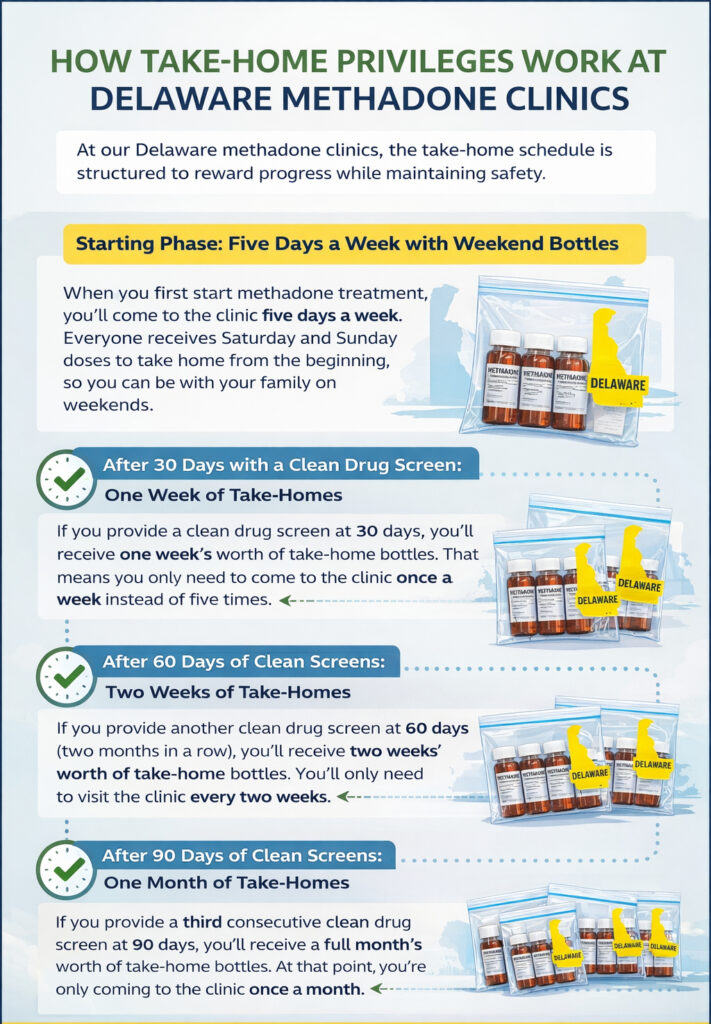
At our Delaware methadone clinics, the take-home schedule is structured to reward progress while maintaining safety.
Starting Phase: Five Days a Week with Weekend Bottles
When you first start methadone treatment, you’ll come to the clinic five days a week. Everyone receives Saturday and Sunday doses to take home from the beginning, so you can be with your family on weekends.
After 30 Days with a Clean Drug Screen: One Week of Take-Homes
If you provide a clean drug screen at 30 days, you’ll receive one week’s worth of take-home bottles. That means you only need to come to the clinic once a week instead of five times.
After 60 Days of Clean Screens: Two Weeks of Take-Homes
If you provide another clean drug screen at 60 days (two months in a row), you’ll receive two weeks’ worth of take-home bottles. You’ll only need to visit the clinic every two weeks.
After 90 Days of Clean Screens: One Month of Take-Homes
If you provide a third consecutive clean drug screen at 90 days, you’ll receive a full month’s worth of take-home bottles. At that point, you’re only coming to the clinic once a month.
This progression has been positively received by patients. It gives people more flexibility, reduces the disruption to work and family life, and serves as a strong motivator to stay engaged with treatment.
Why Clinics Structure Take-Homes This Way
The take-home schedule is designed around two goals: safety and accountability.
Safety
Methadone is a controlled substance. Clinics need to ensure that people are stable on their dose, that they’re not diverting medication to others, and that they’re storing it safely at home. The gradual progression allows clinical staff to build trust and verify that someone is ready for the responsibility.
Accountability and Motivation
Take-home privileges create a clear path forward. If you don’t want to come to the clinic every day, there’s a way to change that. Provide clean drug screens, attend your counseling sessions, and engage with the program. The structure rewards progress.
It also provides a motivator against relapse. If you’re at home with your family and they see that you only go to the clinic once a month, that’s visible progress. If you’re thinking about using and you know that a positive drug screen will send you back to daily dosing, that can be enough to make you pause and reconsider.
Flexibility Without Compromising Structure
Under the old model, someone who was a year clean might still have to come to the clinic six days a week. They might have found a job, dressed up before work, and had to wake up early to stand in line with people who were still actively struggling. That could feel defeating.
The current model allows people who are stable to move through their day without the constant reminder of the clinic. It supports normalcy, employment, and family life while still maintaining the structure and support of the MAT program.
What Happens If Someone Relapses
Relapse doesn’t mean you’re kicked out of the program. It does mean your take-home privileges may be adjusted.
If you test positive for drugs, you’ll likely return to more frequent dosing—possibly back to five days a week. This isn’t meant to be punitive. It’s a recognition that something has changed, and you may need more support and oversight while you restabilize.
The goal is always to help you get back on track, not to punish setbacks. Relapse is part of the recovery process for many people. The clinical team will work with you to adjust your treatment plan, increase counseling support through IOP or PHP programs, or address whatever triggered the relapse.
Once you’re stable again and providing clean drug screens, you can work your way back up the take-home schedule.
How Take-Homes Affect Family Trust and Accountability
One of the often-overlooked benefits of the take-home structure is how it affects family dynamics.
When you’re at home with your spouse or kids and they see that you’re only going to the clinic once a month, that’s a visible sign of progress. It shows them that you’re doing well. It rebuilds trust.
Conversely, if you relapse and suddenly have to start going to the clinic every day again, your family will notice. That visibility creates an additional layer of accountability. You’re not just accountable to the clinic—you’re accountable to the people you live with.
As one site director put it: “If you’re thinking about a relapse, it could be another stop point to making an impulsive decision. You might think, ‘Well, if I do this and I go to that clinic and I test positive, I’ll have to start back at daily dosing. My family, my kids will see that.'”
That accountability isn’t about shame. It’s about having real reasons, grounded in your daily life, to stay committed to recovery.
Common Myths About Methadone Take-Homes
“I’ll have to go to the clinic every day forever.”
Not true. With the updated take-home policies, you can earn monthly privileges within 90 days of providing clean drug screens. Many patients only visit the clinic once a month after they stabilize.
“Take-homes are only for people who’ve been in treatment for years.”
The old model worked that way. The current model allows you to earn one week of take-homes after just 30 days.
“If I relapse once, I’ll lose my take-homes permanently.”
Relapse may mean returning to more frequent dosing temporarily, but it doesn’t mean you can never earn take-homes again. Once you’re stable and providing clean screens, you can work your way back up.
“Take-homes are dangerous because people sell their doses.”
Clinics monitor for diversion. If there are signs that someone is not taking their medication as prescribed or is giving it to others, take-home privileges can be revoked. The structure is designed to balance trust with safety.
“Only certain people qualify for take-homes.”
Anyone in the program can qualify, regardless of age, background, or how long they’ve been using. The criteria are the same: clean drug screens and consistent engagement with treatment.
Frequently Asked Questions
How do I qualify for methadone take-homes in Delaware?
Provide clean drug screens at 30, 60, and 90 days, attend your counseling sessions, and engage with the program. The clinical team will assess your stability and readiness.
What happens if I miss a dose or take it at the wrong time?
Talk to your clinical team. Missing a dose or taking it at the wrong time doesn’t automatically disqualify you from take-homes, but it’s important to communicate with staff if you’re struggling with consistency.
Can I travel with my take-home bottles?
Yes, but you should inform the clinic in advance and follow any protocols they have for traveling with methadone. Some clinics may provide documentation for travel.
What if I lose a take-home bottle or it gets stolen?
Report it to the clinic immediately. Depending on the circumstances, you may not be able to get a replacement dose, and your take-home privileges may be reviewed.
Do I still have to attend counseling if I have take-homes?
Yes. Take-home privileges don’t replace counseling or other services. You’re still expected to meet with your counselor and engage with the full MAT program.
How long do most people stay on methadone?
There’s no set timeline. Some people stay on methadone for months; others stay on it for years. The decision to taper off should be made collaboratively with your medical providers when you’re stable and ready.
Methadone take-home bottles represent progress, trust, and the ability to live a more normal life while staying engaged with treatment. The current structure in Delaware allows people to earn take-homes much faster than in the past, reducing the burden of daily clinic visits while maintaining safety and accountability.
If you’re in treatment now and wondering when you’ll be able to reduce your clinic visits, the path is clear: stay consistent with clean drug screens, attend counseling, and engage with the program. If you’re considering treatment but worried about the daily commitment, know that it doesn’t last forever—and for many people, it doesn’t even last three months.
You can access methadone treatment and work toward take-home privileges at our Dover, Newark, Harrington, or Millsboro locations.
