Ready to get help? Contact one of our Treatment Consultants.


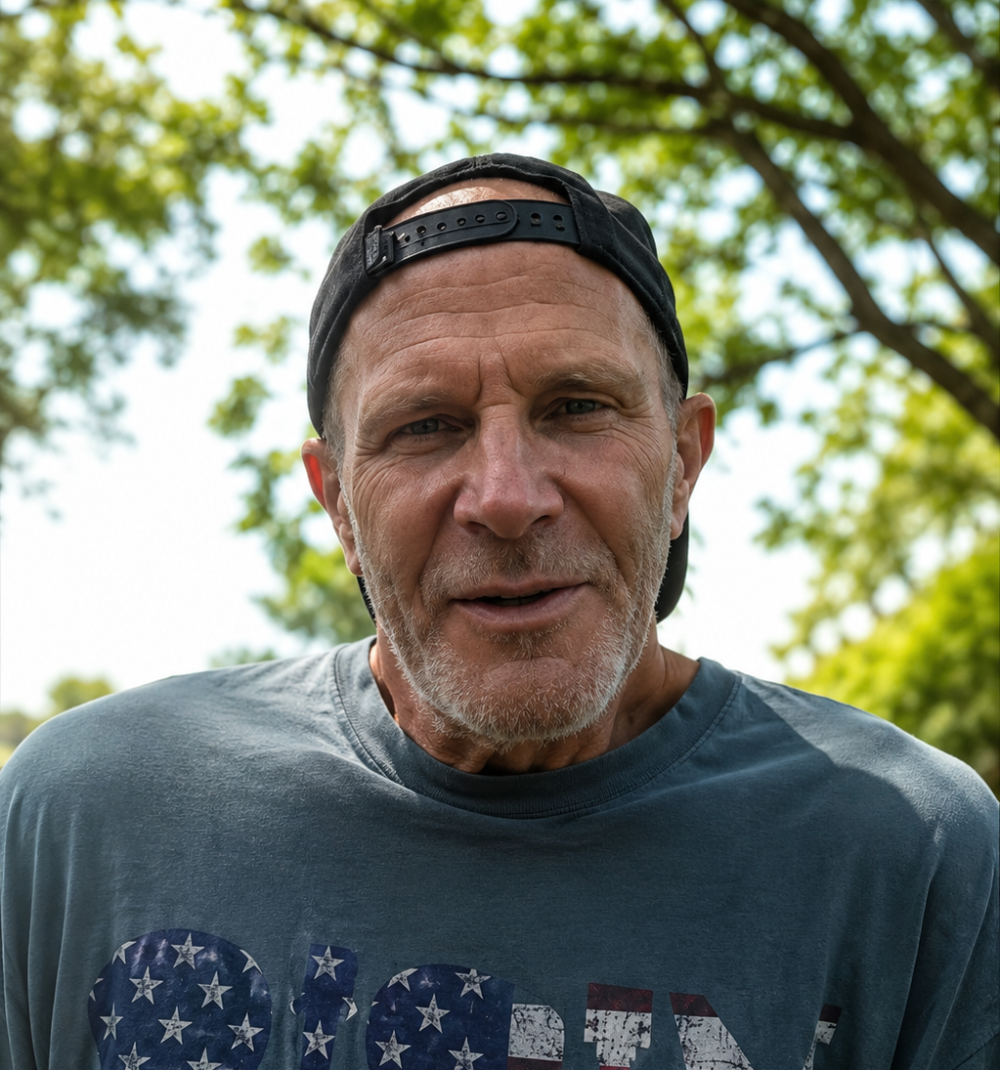
A Life That Came Apart Slowly, Then All at Once
David served in the United States Air Force. His discharge was under less than honorable conditions, a fact that would follow him for decades and cut him off from the Veterans Affairs benefits he later desperately needed.
What came after the military was a long slide: cocaine, alcohol, heroin, homelessness, and eventually a prison sentence in New Jersey for aggravated manslaughter. When he got out, finding work was nearly impossible. Relapse filled the gaps. The cycle repeated itself for years.
By November of last year, David was living under a boardwalk in Atlantic City and Googling his own name, looking for anything. What he found was a memorial page. His father had died in 2018. David had not known.
“I found out my father passed away and I was not there. I was not part of the family.”
He had also missed his mother’s funeral. The weight of both absences was something he had never fully processed. Reading about his father’s death online, alone, in the cold, sent him into a three-week period of deep despair. He used drugs during that time while, by his own account, hoping not to wake up.
“I was disgusted with myself.”
The Intervention That Changed Direction
What pulled David out was not a program or a phone call. It was a person.
A Veterans Affairs outreach worker found him in Atlantic City. David had long believed he was ineligible for VA services because of his discharge status. The outreach worker connected him with Warriors Helping Warriors in Delaware, which in turn connected him with the Bridge Clinic in New Castle for an initial intake with a psychologist.
At that intake, David received diagnoses he had never had before: post-traumatic stress disorder, depression, and anxiety. Medication was recommended. He resisted at first.
“I did not want to take it. But I realized I could not keep going on my own.”
He accepted the help. He started Zoloft. And because he was not yet eligible for VA benefits, he was enrolled in the Intensive Outpatient Program at CORAS.
What the Program Actually Did
David goes to CORAS on Mondays, Wednesdays, and Fridays, with a Thursday case conference added to the schedule. He describes the first day as skeptical: he walked in not expecting much. That changed once he started showing up consistently.
The shift did not come from a counselor telling him what to do. It came from a documentary he watched as part of the program. Something in it landed differently than anything he had heard before.
“I realized drugs were not the problem. They were a symptom. The problem was me and my relationship with myself.”
That reframe changed everything about how he approached treatment. Instead of trying to stop using, he started trying to understand why he had been using. Fear. Shame. An inability to ask for help. A lifetime of seeking validation from other people instead of building it from within.
“I was unwilling to listen. I thought I knew everything. I did not know anything.”
The Group Changed Him
One moment in a group session stood out. Another participant told David that they did not know anything about him. After weeks of sitting in the same room with these people, he was still a stranger to them because he had not let anyone in. That observation hit harder than he expected.
“I realized I had been living in isolation and shame for so long that I did not know how to let people see me.”
The group at CORAS became the place where that changed. He describes the other participants not as people to look down on, but as people he trusts, people dealing with hard circumstances and showing up anyway. That peer accountability became a core part of what keeps him coming back.
His counselors, Jamie and Mike, have both been instrumental. He speaks about Mike’s consistently positive demeanor as something that models what recovery can look like day to day.
Learning to Think Differently
David talks about two tools that have become essential: consequential thinking, and recognizing what he calls the “rabbit hole”, the mental path that leads toward relapse. When he feels the urge to use, he does not ignore it. He traces it, names it, and uses his own past as the reason not to follow it.
He also talks about patience as something he had to learn from scratch. His whole life had been built around instant gratification, finding the fastest way to feel better. Recovery required the opposite.
“I had to learn to sit with discomfort. That was new for me.”
The results are visible to the people around him even when he struggles to see them himself. His counselor has pointed out his growth on days when David cannot recognize it. He walks differently now, he says. Head up. Eye contact. A small thing that felt impossible not long ago.
Processing What Cannot Be Changed
David does not minimize what he has done or what he lost. He missed his parents’ funerals. He was absent from his family for years. He carries the weight of the manslaughter conviction. None of that goes away.
But he has developed a philosophy about it that keeps him functional rather than frozen.
“I cannot change the last 15, 20, 30 years. But what I do right now becomes my tomorrow’s past. So I focus on right now.”
He is working on forgiving himself, specifically for not being there when his parents died. He describes it as daily work, not something that resolves and stays resolved. Some days are harder than others. He shows up anyway.
What He Wants Other People to Know
David’s advice is direct: be completely honest with yourself. Not mostly honest. Not honest about the parts that are easy. A hundred percent honest.
“Drugs are not your problem. That is just what you are using to deal with the problem. The real work is uncomfortable. But I guarantee it leads somewhere better.”
He acknowledges that getting out of the house is its own obstacle, that television and isolation are easy defaults that keep people stuck. His answer: replace the habit. Go to a session. Get outside. Find a group. The resources exist even for people without insurance or VA benefits.
He also knows what it feels like to believe no one is coming and nothing will work. He believed that himself. Then a stranger found him under a boardwalk and offered him a different option.
“I call it divine intervention. I got one more chance. I am not wasting it.”
If You Are Ready to Take That Step
David’s path into treatment ran through the CORAS Intensive Outpatient Program, a structured program that met him where he was and gave him the tools to understand his own recovery. CORAS also offers inpatient rehab and a full range of behavioral health services for people at every stage.
Whether you are newly in crisis or have been cycling through relapse for years, there is a place to start. CORAS operates five locations across Delaware: Newark, Dover, Millsboro, Harrington, and Wilmington. Visit CORAS or call: 833-886-2277.
You do not have to have everything figured out before you call. David did not.
The Road to Recovery is an ongoing series. Each story is shared with the participant’s consent.
